
Caffeine Moderation is Key Element to a Healthy Day
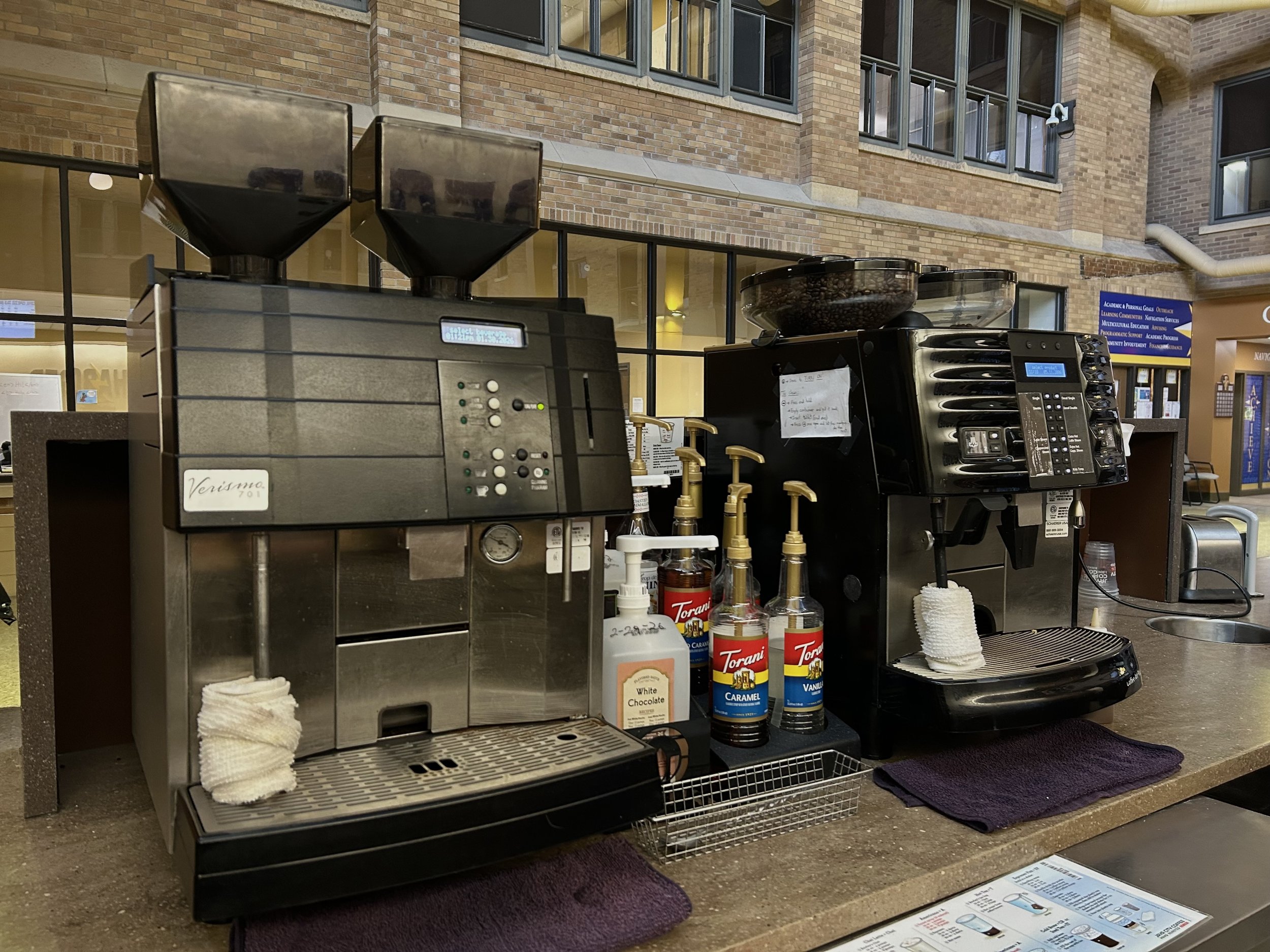
Behind the counter with a barista.
Photo by Joanna Boal Neves
While students rely on a morning coffee boost to power through their morning lectures, a local health expert warns that the popular habit may be taxing the heart more than the brain.
Between the high-pressure demands of academic life and the social pull of campus life, college students are increasingly turning to the espresso machine to bridge the gap. While the ritual of a morning brew is a staple of the college experience, the line between a helpful boost and a health risk is becoming thinner.
Valeria Viroomal, a student barista who witnesses the daily "caffeine rush," notes that the busiest hour of the day falls between 10:00 and 11:00 a.m., a time when most students have finally made it to campus. According to Viroomal, the most frequent orders are for caramel macchiatos and white mochas, though she observes that a single coffee often isn't enough for some students. Some supplement their day with canned energy drinks throughout the afternoon. This "stacking" behavior is exactly what health professionals monitor closely, as it can quickly push a student past the recommended daily limits of caffeine.
Jacki Volz, a nurse at Briar Cliff University, warns that while caffeine is a stimulant that can make you feel more alert and good in the short term, it requires a careful balancing act. Despite its reputation for providing a competitive edge, Volz points to a University of Nebraska study suggesting that caffeine may not actually increase overall performance specially with athlete performances. Furthermore, she clarifies the dehydration myth; while caffeine is a diuretic, “You don’t necessarily need a one-to-one water-to-coffee ratio to stay hydrated, though moderation remains the most important thing”, said Volz.
To maintain heart health and avoid "cardiac arrhythmias," Volz recommends a maximum daily intake of 300 to 400 milligrams of caffeine. She added that these should be spread out across the day, rather than consumed all at once. For those looking to protect their sleep cycle, the expert advice is “to cut off the caffeine at least six hours before bedtime.”
As the campus continues to run on beans and steam, the message from the nurse’s office is clear: caffeine is a safe and secure tool for student life, provided it is treated as a supplement to a balanced lifestyle rather than a substitute for rest. So if managed correctly, it is safe and secure to have it.