
Briar Cliff University’s AI Policies, and How it Affects Teachers and Their Views
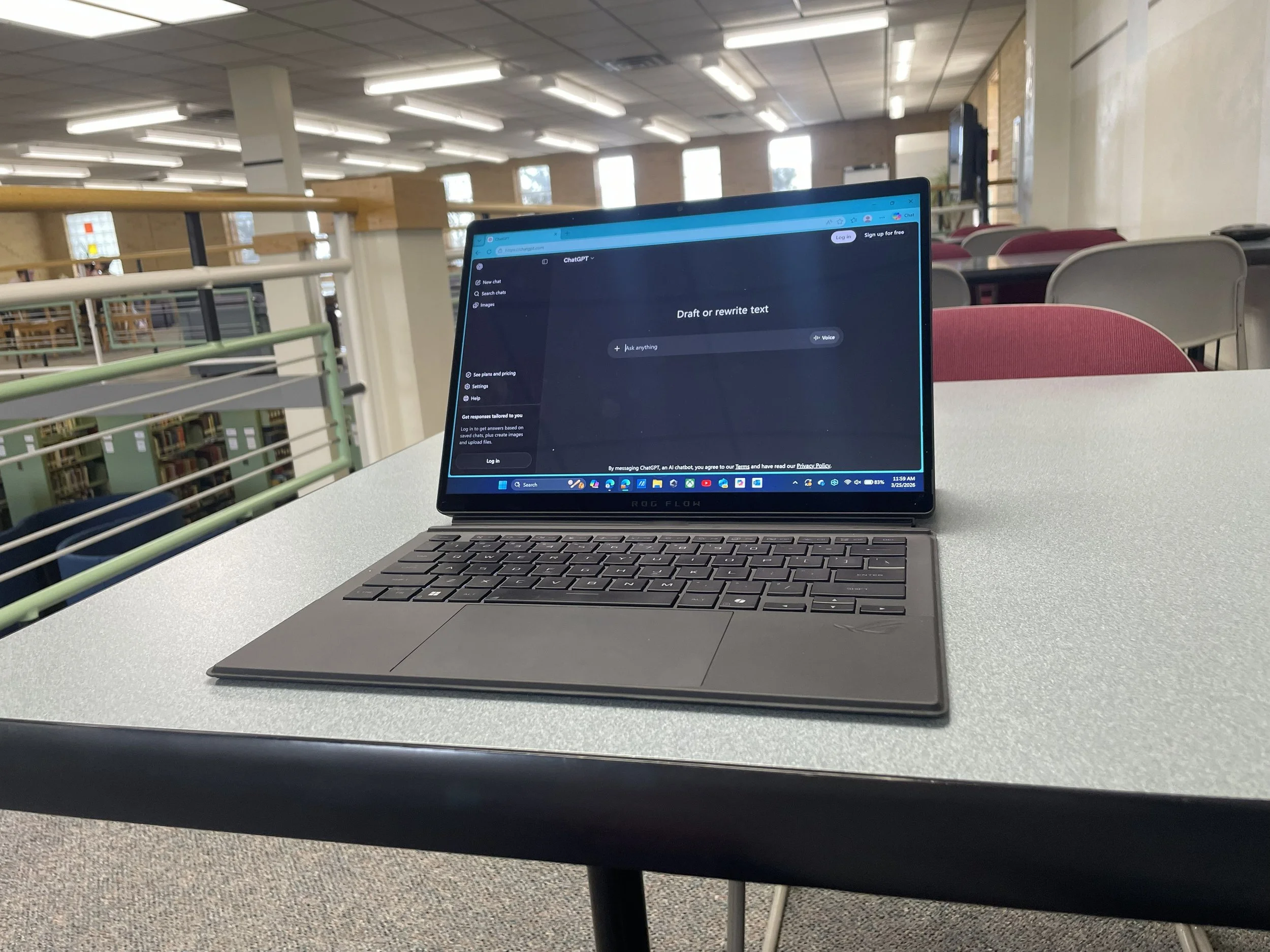
ChatGPT is an AI chatbot that faculty are figuring out how to integrate into learning environments.
Photo by Colby Cox
Briar Cliff University updated its artificial intelligence policy between the 2024–25 and 2025–26 school years, moving from a loosely defined approach to a clearer three stage system that allows professors to decide how AI is used in their classrooms.
Under the updated policy, instructors can choose between three levels of AI usage. Some classes prohibit AI entirely. Others allow limited use as long as students disclose when and how the technology was used. The most open level allows students to use AI tools more freely, though the work must still represent the student’s own ideas, and the use of AI must be acknowledged.
The change reflects the growing role of artificial intelligence in education and the workplace. However, the shift has also highlighted different perspectives among Briar Cliff faculty on how the technology should fit into learning environments.
Jacob Torbeck, a professor of theology and philosophy, said he remains cautious about generative AI and its impact on student learning.
“My overall stance on AI is that it is an emerging tool that probably has some productive usage,” Torbeck said. “But in my field and in my work, AI is mostly an obstacle to the learning outcomes I’m looking for.”
Torbeck said many students treat AI as a shortcut instead of using it as a tool to deepen their understanding. Because of this concern, he has shifted many of his assignments toward handwritten work, physical reading, and in class writing to limit the use of AI generated responses.
“If a student uses AI, it’s almost impossible to prove one hundred percent,” Torbeck said.
Torbeck also raised ethical concerns surrounding artificial intelligence, including how some AI systems are trained using large collections of existing writing and artwork. He also pointed to the environmental costs associated with the data centers that power many AI systems.
Kristen Perez, an associate professor in the Media Communications Department, takes a more supportive view of AI in the classroom. Perez said she encourages students to use AI tools in many of her courses because they will likely encounter them in professional settings after graduation.
“When used properly, AI can be such a beneficial tool for students,” Perez said.
Perez described AI as a tool that can assist with tasks such as brainstorming ideas, organizing information, or improving writing. She said the important part is that students remain involved in the process and review anything the technology produces.
“The key though is it starts with the human and ends with the human,” Perez said.
While their overall perspectives differ, both professors emphasized that AI should not replace the learning process itself. Perez said college should still focus on developing critical thinking skills through the process of completing assignments.
“I think especially in the college setting, it’s the process,” Perez said.
Torbeck expressed a similar idea, saying writing and reflection are essential parts of developing personal understanding.
“One of the ways I learn how I think is by writing,” Torbeck said.
As artificial intelligence continues to expand into more aspects of daily life, Briar Cliff’s updated policy allows professors to decide how the technology fits within their disciplines. The conversation among faculty suggests that while opinions on AI may differ, many educators agree that students must remain responsible for their own thinking and learning.